First, ask the most important question: Why are you renovating? Your answer will shape every subsequent decision. Are you looking for:
Be specific. Instead of "a bigger kitchen," define it as "a kitchen with an island for food prep, seating for four, and more storage for appliances." This clarity will be invaluable when communicating with your designer and contractor.
| Work Category | Item / Task | Estimated Cost Range (RM) | Unit | Key Factors Influencing Cost |
|---|---|---|---|---|
| Demolition & Hacking | Hacking Wall Tiles / Floor Tiles | RM2,000 - RM3,000 | Per Bathroom/Area | Thickness of concrete, accessibility, disposal fees. |
| Demolition & Hacking | Hacking & Rebuilding Walls | RM50 - RM80 | Per sq ft | Load-bearing vs. non-load-bearing walls, required structural support. |
| Wet Works & Structural Concrete | Kitchen Countertop (Basic) | RM220 - RM250 | Per foot run | Thickness, complexity of shape, reinforcement required. |
| Wet Works & Structural Concrete | Waterproofing (Bathroom) | RM1,500 - RM2,000 | Per Bathroom | Type of membrane used, surface area, number of coats. |
| Wet Works & Structural Concrete | Kitchen Extension (Basic Structure) | RM150 - RM300 | Per sq ft | Foundation requirements, roofing materials, complexity of tying into existing structure. |
| Tiling | Ceramic / Porcelain Tiles (Supply & Install) | RM11 - RM15 | Per sq ft | Tile size, complexity of pattern, quality of tile. |
| Tiling | Premium Tiles (e.g., Natural Stone) | RM40 - RM250+ | Per sq ft | Rarity of the stone, finish, cutting and sealing requirements. |
| Electrical | Lighting Point (Casing) | RM65 - RM90 | Per Point | Concealed wiring is more expensive. Type of fixture. |
| Electrical | 13A Power Point (Casing) | RM100 - RM150 | Per Point | Number of gangs, use of specialized outlets. |
| Electrical | Water Heater / Aircond Point | RM200 - RM280 | Per Point | Requires thicker gauge wiring and dedicated circuit breaker. |
| Electrical | Full House Rewiring | RM3,500 - RM10,000+ | Per Project | Size of the house, number of points, single-phase vs. three-phase. |
| Plumbing | New Piping (Inlet/Outlet) | RM350 - RM550 | Per Point | Distance from main line, type of pipe material. |
| Plumbing | Sink / Basin Installation | RM160 - RM550 | Per Unit | Type of sink, complexity of fittings. |
| Plumbing | Full Bathroom Plumbing | RM3,000 - RM10,000+ | Per Bathroom | Extent of pipe replacement, relocation of fixtures, type of shower system. |
| Ceilings & Painting | Plaster Ceiling (Flat) | RM5 - RM7 | Per sq ft | Complexity, height of ceiling. |
| Ceilings & Painting | Painting (2 Coats Emulsion, Walls) | RM2 - RM4 | Per sq ft | Quality of paint, number of coats, surface preparation required. |
| Carpentry (Custom) | Kitchen Cabinet (Base, Melamine) | RM200 - RM450 | Per foot run | Material, hardware, internal fittings. |
| Carpentry (Custom) | Kitchen Cabinet (Wall, Melamine) | RM200 - RM380 | Per foot run | Height, material, type of door. |
| Carpentry (Custom) | Wardrobe (Swing Door, Melamine) | RM550 - RM650 | Per foot run | Height, internal configuration, door finish. |
| Carpentry (Custom) | Wardrobe (Sliding Door, Melamine) | RM650 - RM750 | Per foot run | Quality of sliding mechanism, door material and finish. |
When do you need a permit? Generally, for any work that alters the structure or facade of your house. This includes extensions, removing or moving load-bearing walls, and significant changes to the roofline.
When might you not need a permit? For minor, internal cosmetic work. This typically includes painting, installing built-in cabinets, replacing flooring, and non-structural plaster ceiling work.
The Process: Obtaining a permit usually involves hiring a registered architect or draughtsman to create official drawings, which are then submitted to the council for approval. This process can take 8-12 weeks, so it must be factored into your project timeline from the very beginning
Do Your Due Diligence: Always verify a contractor's credentials. Check their company registration (SSM) and, crucially, their CIDB (Construction Industry Development Board) license. A CIDB G3 license, for example, indicates a contractor is registered and qualified to take on projects up to RM1,000,000.
Demand a Detailed Quotation: A professional contractor will provide a detailed, itemized quotation, not a vague lump-sum price. This document should form the basis of your contract and clearly outline the scope of work, materials to be used, and payment schedule.
Insist on a Written Contract: A verbal agreement is not enough. A formal contract protects both you and the contractor. The CIDB has even developed a "Standard Terms of Construction Contract for Renovation and Small Projects" which represents the industry's best practice for a fair and comprehensive agreement.

Biophilic Design: This is more than just adding a few potted plants. It’s a philosophy of connecting your home with nature. Think large windows for natural light, the use of natural materials like wood, stone, and rattan, and creating seamless transitions between indoor and outdoor spaces.
Sustainable Minimalism: This trend focuses on creating calm, uncluttered environments with clean lines and simple forms. It favors a palette of warm, earthy tones—think terracotta, sage green, and sandy beige—and an increasing emphasis on sustainable and eco-friendly materials.
The Smart & Efficient Home: Technology is becoming seamlessly integrated into our homes. This includes smart home automation for lighting and security, which is a rapidly growing market in Malaysia , as well as a strong push towards energy efficiency with features like solar panel integration and EV charging points.
The Work Triangle: The cornerstone of efficient kitchen design is the ergonomic triangle formed between the three key work zones: the sink (cleaning), the stove/hob (cooking), and the refrigerator (storage). The paths between these three points should be unobstructed and reasonably short.
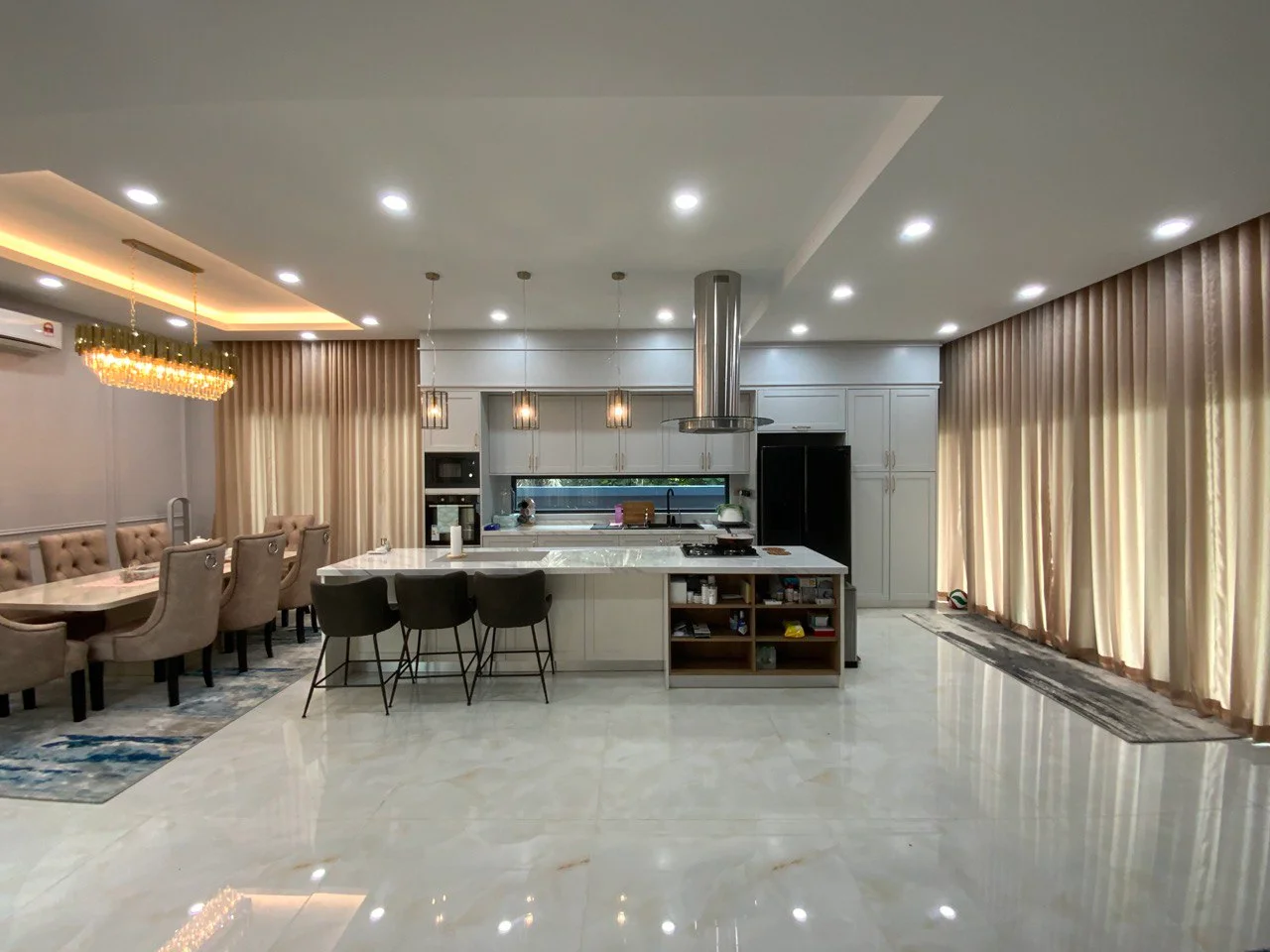
Wet & Dry Kitchens: A hugely popular concept in Malaysia, this involves separating the kitchen into two zones. The "wet kitchen" is for heavy, oily, and aromatic cooking, often equipped with a powerful hood and durable, easy-to-clean surfaces. The "dry kitchen" is for light meal preparation, baking, and entertaining, often featuring more aesthetic finishes and an island or breakfast bar.
The Home Office: Whether it’s a dedicated room, a nook in the living area, or a multi-functional space that doubles as a guest room, planning for a productive home office is a key consideration in modern renovations. Focus on good lighting, ergonomic furniture, and sufficient storage.
Countertops: This is a major visual and functional element, especially in the kitchen.
Quartz: An engineered stone that is non-porous, highly durable, and low-maintenance. It offers a vast range of consistent colors and patterns.
Granite: A natural stone prized for its unique patterns and high heat resistance. It is porous and requires periodic sealing to prevent stains.
Solid Surface: A budget-friendly option that can be seamlessly joined, eliminating visible lines. It is softer than stone and can be susceptible to scratches and heat.
Cabinets: The material you choose for your kitchen cabinets impacts cost, durability, and style.
Melamine Chipboard: The most affordable option, offering a wide variety of colors and a scratch-resistant surface. Its weakness is a low resistance to moisture if the edges are not properly sealed.
Plywood with Laminate: A good mid-range option. Plywood is structurally stronger and more water-resistant than chipboard, while the laminate finish offers excellent durability and a huge variety of styles.
Solid Wood: The premium choice, offering timeless beauty and durability. It is the most expensive option and can be susceptible to warping in Malaysia's humid climate if not properly treated.
Flooring: Your flooring choice needs to withstand daily traffic while complementing your design.
Tiles (Porcelain/Ceramic): The most popular choice in Malaysia for their durability, water resistance, and ease of maintenance. Available in a vast array of styles and prices.
Vinyl/Laminate: Budget-friendly options that can convincingly mimic the look of wood. They are comfortable underfoot but can be less durable and susceptible to water damage compared to tiles.
We often send out our newsletter with news and great offers. We will never disclose your data to third parties and you can unsubscribe from the newsletter at any time.
Unfortunately, we’re unable to offer free samples. As a retailer, we buy all magazines from their publishers at the regular trade price. However, you could contact the magazine’s publisher directly to ask if they can send you a free copy.
You can create a new account at the end of the order process or on the following page. You can view all of your orders and subscriptions in your customer account. You can also change your addresses and your password.
No, you don’t have to create an account. But there are a few advantages if you create an account.
You never have to enter your billing and shipping address again
Find all of your orders, subscriptions and addresses in your account
Download invoices of your orders
No, we don’t have a physical store location at the moment. We accept only orders through our online shop and we’re shipping all orders with the Swiss Post Service. Please visit our shipping section for more details.
From time to time you will find us at design fairs and popup markets in Switzerland. Subscribe to our newsletter and you’ll receive the latest news.
For projects like home extensions, the structural work is the most critical component. This is not a DIY job and requires professional engineering oversight.
Electrical Planning: This must be done before any walls are closed up. Think about your lifestyle and where you will need power. A common mistake is not planning for enough outlets, leading to a lifetime of messy extension cords. This is especially critical in the kitchen, where numerous appliances compete for power. High-wattage items like ovens, water heaters, and air conditioners require their own dedicated circuits to prevent overloads.
Plumbing Considerations: For bathrooms and kitchens, ensure the plumbing layout is practical and efficient. If you're dreaming of a kitchen island with a sink, be aware that it presents a unique plumbing challenge that requires specialized venting solutions to work correctly and meet building codes.
Finishing Works: This stage includes painting, installation of lighting fixtures and ceiling fans, fitting of plumbing fixtures (taps, showerheads), and installation of cabinetry hardware.
The Final Walkthrough: Once your contractor reports that the work is complete, it’s time for a thorough inspection. Do not rush this process. Go through each room with your contractor and the project plans in hand. Create a "snag list" or "punch list" of any items that are incomplete, incorrect, or not up to standard. This could be anything from a paint touch-up to a misaligned cabinet door. A professional contractor will expect this and will work to rectify all items on the list.
Understanding Warranties: Your contractor should provide a warranty for their workmanship, often called a "Defect Liability Period." This is a set period after handover (commonly 12-24 months) during which they are obligated to return and fix any defects that arise from their work. Be sure this is clearly stated in your contract.