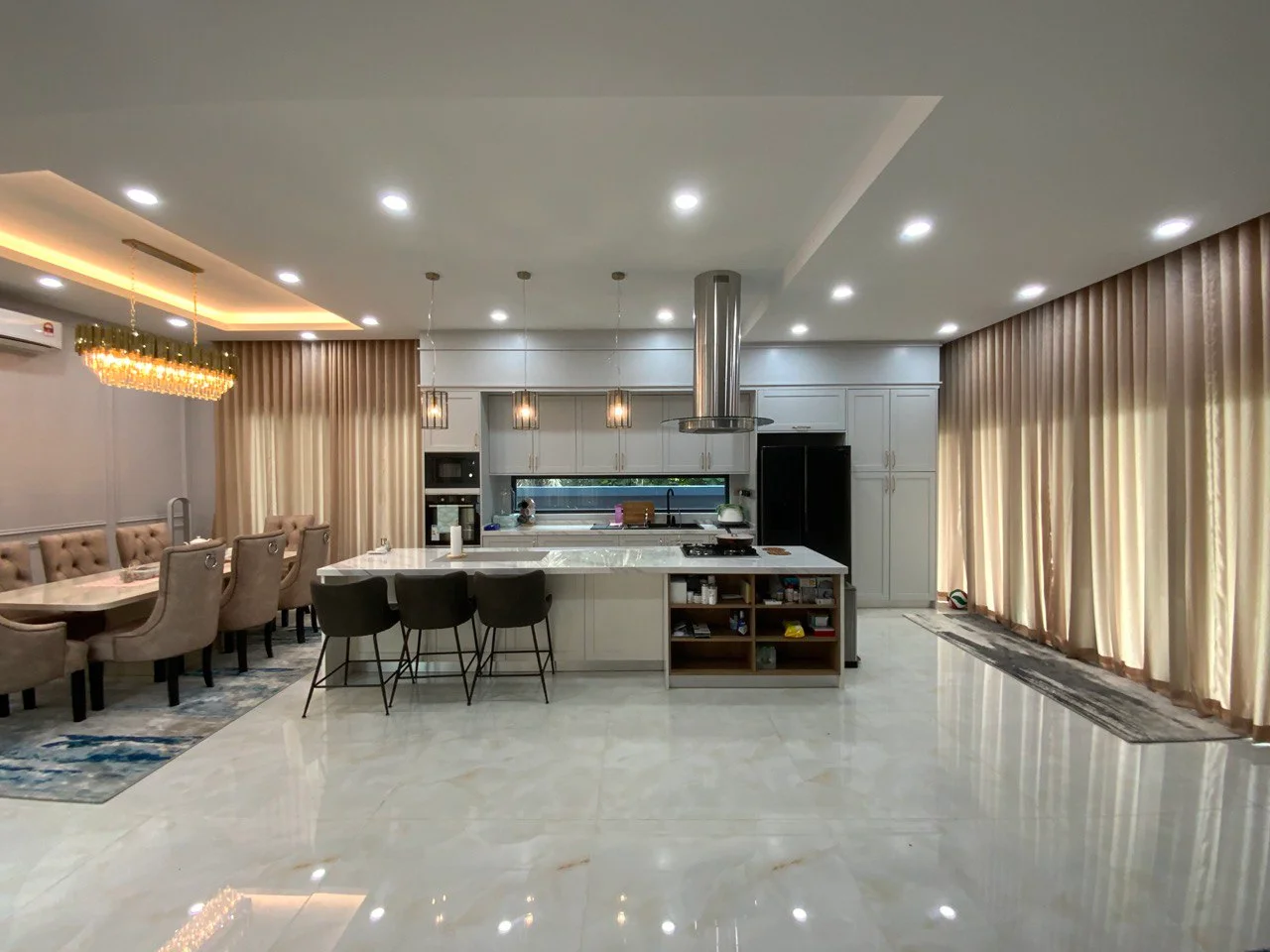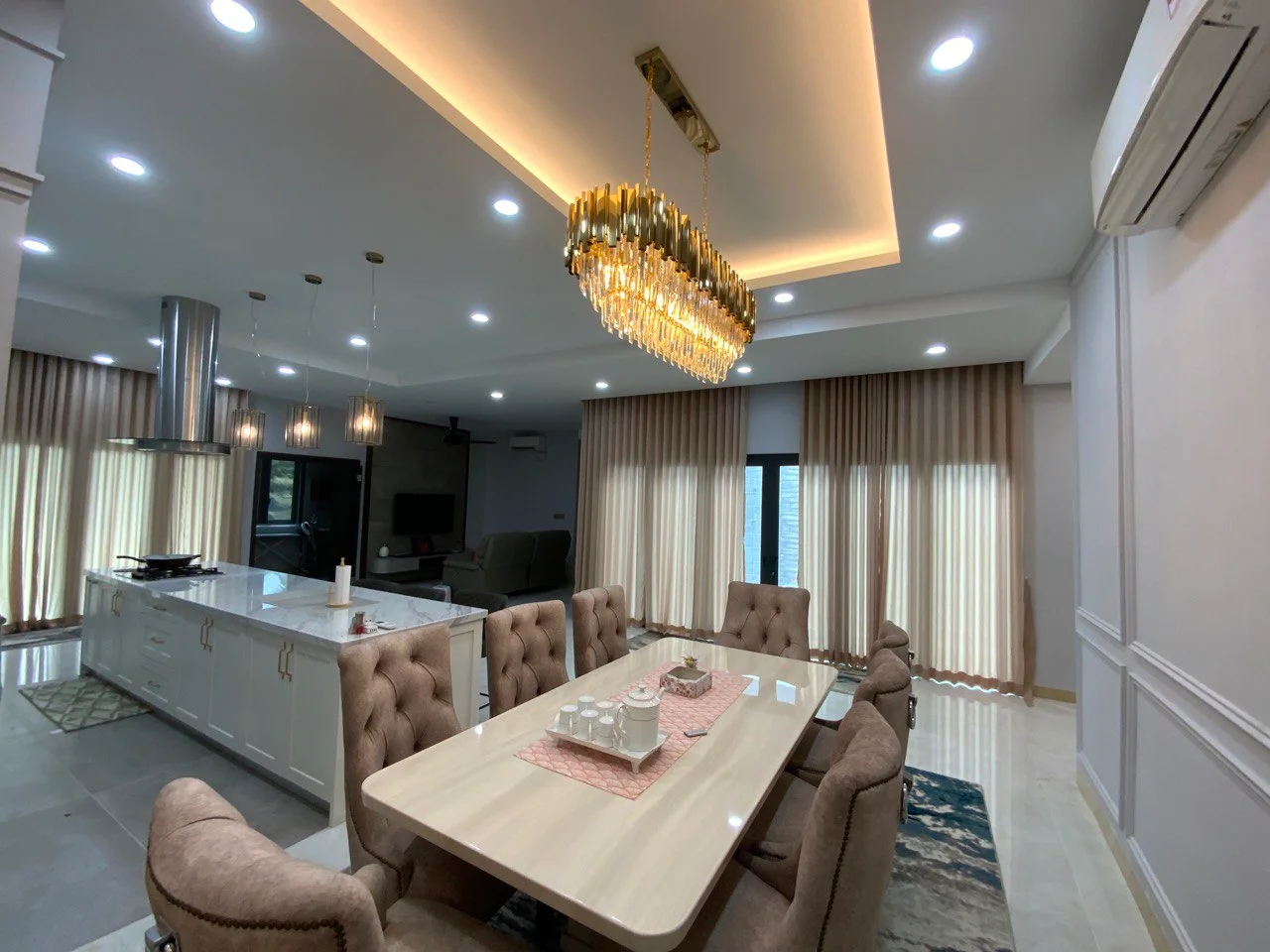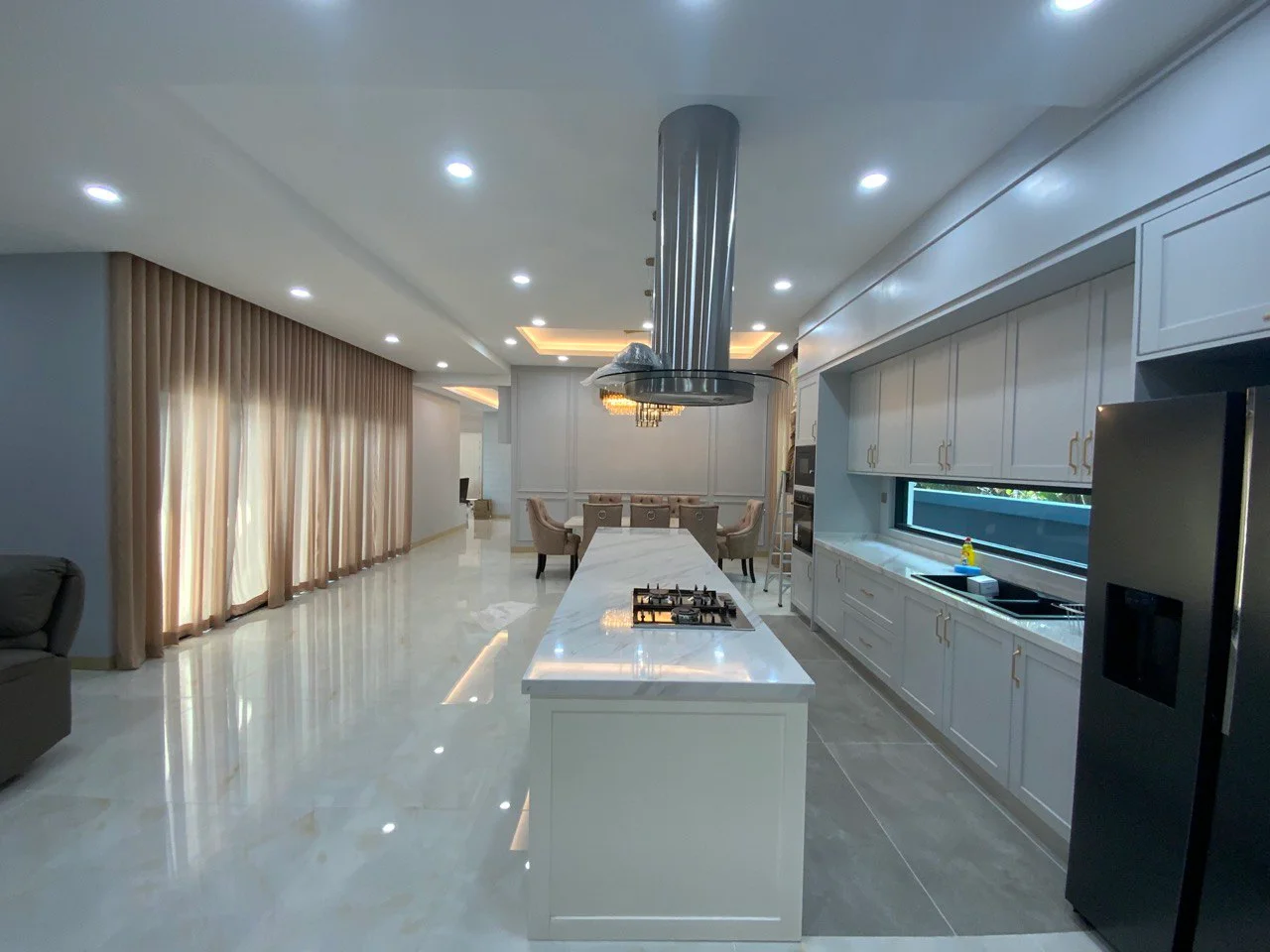

The kitchen island has become the ultimate symbol of the modern, open-plan home. It’s a versatile hub for food preparation, casual dining, and socializing. For many homeowners, the dream island includes a sink, creating a highly functional and ergonomic secondary workspace. However, this popular design feature presents a unique and complex technical challenge that many are unaware of: plumbing.
The kitchen island has become the ultimate symbol of the modern, open-plan home. It’s a versatile hub for food preparation, casual dining, and socializing. For many homeowners, the dream island includes a sink, creating a highly functional and ergonomic secondary workspace. However, this popular design feature presents a unique and complex technical challenge that many are unaware of: plumbing.
As integrated engineering specialists, we at iDFAC have seen firsthand how this seemingly simple feature can go wrong if not handled by a professional. Unlike a regular sink that sits against a wall, an island sink is in the middle of the floor, creating a tricky problem for drainage and venting. This guide will explain what you need to know to ensure your island sink is both beautiful and flawlessly functional.
Every drain in your home needs a vent. A vent is a pipe that allows air into the drainage system. This air is crucial because it equalizes the pressure, allowing water and waste to flow away smoothly and preventing a vacuum from forming. Without a proper vent, your drain will be slow, noisy, and may release unpleasant sewer gases into your kitchen.
For a normal sink, the vent pipe is hidden inside the adjacent wall, where it rises vertically and connects to your home’s main vent stack, which exits through the roof. With a kitchen island, there is no adjacent wall. This is the core of the challenge.
A licensed plumber will use one of two professional, code-compliant methods to solve this problem. An S-trap, which is a common but incorrect DIY solution, is not compliant with building codes and should be avoided.
Solution 1: The Loop Vent (or Island Fixture Vent) This is the traditional and often preferred method. It involves creating a “loop” of pipe inside the island cabinet.
How it works: The vent pipe rises vertically from the sink’s drain to just below the countertop. It then “loops” over and goes back down, running horizontally under the floor to connect to the main vent stack in the nearest wall.
Pros: It’s a highly reliable, passive system that requires no mechanical parts.
Cons: It requires sufficient vertical space inside the cabinet to create the high loop and can be more complex to install.
Solution 2: The Air Admittance Valve (AAV) An AAV is a small, mechanical one-way valve that can be installed on the drain line inside the cabinet.
How it works: When water flows down the drain, it creates negative pressure. The AAV automatically opens to let air in from the cabinet space, equalizing the pressure. It then closes to prevent any sewer gases from escaping out.
Pros: It is much simpler, faster, and cheaper to install than a loop vent, especially in renovations where running a new pipe under the floor is difficult.
Cons: As a mechanical device, it can potentially fail over time and may need to be replaced. It must also be installed in a location with adequate airflow and remain accessible for future maintenance.
Cost: The plumbing work for an island sink is more complex than for a standard sink. You should budget extra for the labor and materials required for either a loop vent or an AAV installation.
Timing is Everything: The decision to have an island sink must be made at the very beginning of your renovation. The necessary plumbing lines must be run under the floor before any concrete is poured or flooring is laid. Trying to add it later is extremely difficult and expensive.
A kitchen island with a sink is a perfect example of where design, engineering, and project management must converge. The desire for a beautiful design feature creates a complex engineering challenge that must be executed at the right time in the construction sequence. This is the essence of iDFAC’s integrated value proposition.
Dreaming of a kitchen island with a sink? Contact iDFAC today to ensure your beautiful design is backed by flawless engineering.

We often send out our newsletter with news and great offers. We will never disclose your data to third parties and you can unsubscribe from the newsletter at any time.
Unfortunately, we’re unable to offer free samples. As a retailer, we buy all magazines from their publishers at the regular trade price. However, you could contact the magazine’s publisher directly to ask if they can send you a free copy.
You can create a new account at the end of the order process or on the following page. You can view all of your orders and subscriptions in your customer account. You can also change your addresses and your password.
No, you don’t have to create an account. But there are a few advantages if you create an account.
You never have to enter your billing and shipping address again
Find all of your orders, subscriptions and addresses in your account
Download invoices of your orders
No, we don’t have a physical store location at the moment. We accept only orders through our online shop and we’re shipping all orders with the Swiss Post Service. Please visit our shipping section for more details.
From time to time you will find us at design fairs and popup markets in Switzerland. Subscribe to our newsletter and you’ll receive the latest news.
From building a dream home on your own land (bina rumah atas tanah sendiri) to complex house extensions and renovations, our certified team manages the entire process.
As a leading solar panel installation company in Malaysia, we design and install high-ROI grid-tied solar systems. Reduce your electricity costs by up to 75% and increase your property's value
We provide comprehensive M&E services in Kuala Lumpur, from complete system design and electrical wiring to critical troubleshooting for commercial facilities.
An integrated contractor like iDFAC manages all key services—building, civil, M&E, solar, and interiors—with our own in-house teams. This provides you with one point of contact, eliminating the risks, delays, and communication gaps common when juggling multiple companies. It’s a turnkey construction service designed for efficiency and peace of mind.
Absolutely. iDFAC Engineering Solutions is a registered company and holds a Grade G3 license from the Construction Industry Development Board (CIDB) for Building (B04), Civil Engineering (CE21), and Mechanical & Electrical (ME) works. This ensures our operations meet strict national standards for quality and safety.
Our primary operational areas are Selangor and Kuala Lumpur (KL), including key locations like Shah Alam, Klang Valley, Putrajaya, and Ampang. We have also completed projects across Peninsular Malaysia, including in Melaka, Negeri Sembilan, and Perak.
Our clients have seen their monthly TNB bills reduced by as much as 75%. For instance, a 9 kWp system we installed in Bukit Jalil took a client's bill from RM600 down to just RM150 per month. We provide a detailed ROI calculation as part of our free solar consultation.
The process generally involves design and planning, submission for local council (PBT) approval, financing, construction, and obtaining the Certificate of Completion and Compliance (CCC). Our integrated service is designed to guide you through every step, making the journey clear and manageable.